Cordyceps is one of the most fascinating and clinically valuable medicinal mushrooms available – and technically, it isn’t even a mushroom. With a history of therapeutic use stretching back to the Qing Dynasty and a growing body of human clinical trial evidence, Cordyceps deserves a prominent place in any practitioner’s toolkit. Here’s everything you need to know about its biology, bioactive compounds, and evidence-based applications.
What Is Cordyceps? Biology & Traditional Background
Cordyceps are particularly fun fungi. Where most fungal species feed on dead or decaying plant matter, most species of Cordyceps uniquely parasitise insects and other arthropods – a category known as entomopathogenic fungi. The mycelium infiltrates and digests the insect host before the fruiting body emerges from the remains. Alarming to behold, perhaps, but a remarkable product of the natural world.
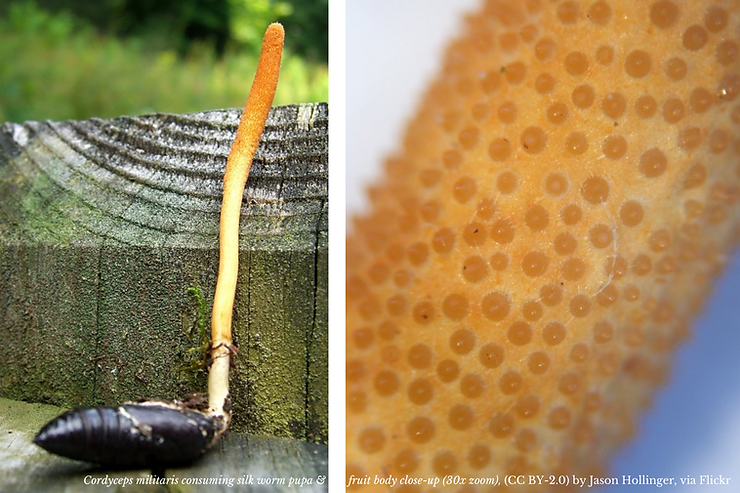
The term “Cordyceps” is not entirely clear-cut. It can refer broadly to fungi found across the Cordyceps and Ophiocordyceps genera, or to specific species within these groups.
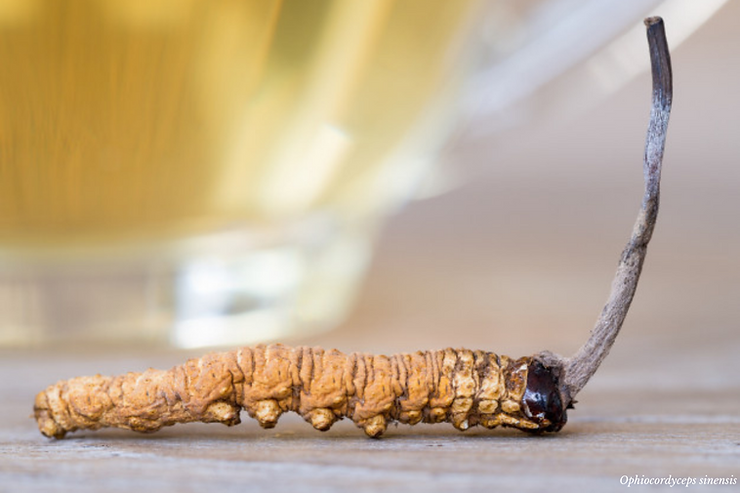
The original Cordyceps – previously identified as C. sinensis, now reclassified as Ophiocordyceps sinensis – is a rare species native to the Tibetan plateau. Its fruiting body has been revered in traditional medicine systems across Asia for centuries, with the earliest written account of its use dating to 1757, during the Qing Dynasty in China [1]. The Chinese name for this species (dōng chóng xià cǎo) translates to “summer grass, winter worm” – a nod to its insect host – and it is known in English as the caterpillar fungus.
Traditional uses for Cordyceps fruiting body across Asia include [1,2]:
- Whole body tonic and invigorant
- Aphrodisiac
- Energy enhancement and stamina support
- Convalescence after infection and severe illness
- Lung invigoration and respiratory disease
- Kidney, heart, and stomach disorders
C. militaris vs O. sinensis – Which Cordyceps Should You Use?
Ophiocordyceps sinensis is rare in nature, prohibitively expensive, and its fruiting body cannot be cultivated. This presents a practical problem for clinical use. Two options exist: use the mycelium of O. sinensis – which is non-traditional and less well-evidenced – or identify a medically interchangeable species with a cultivatable fruiting body.
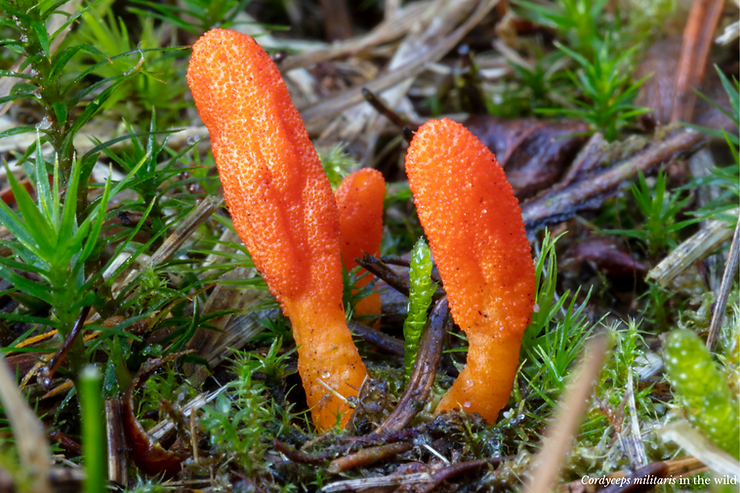
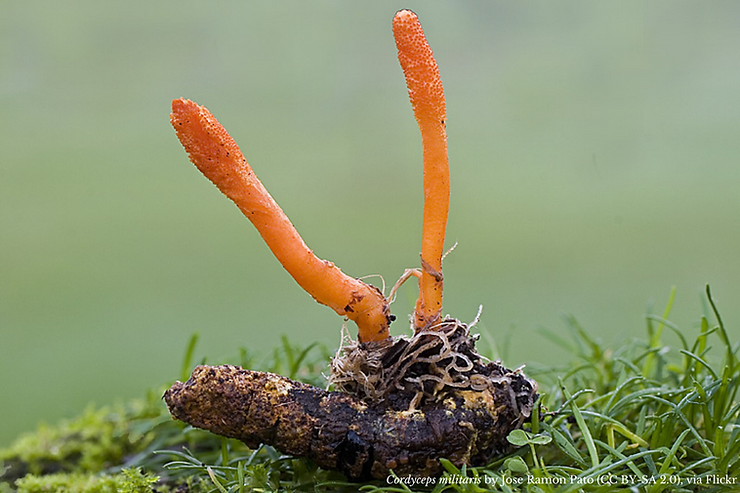
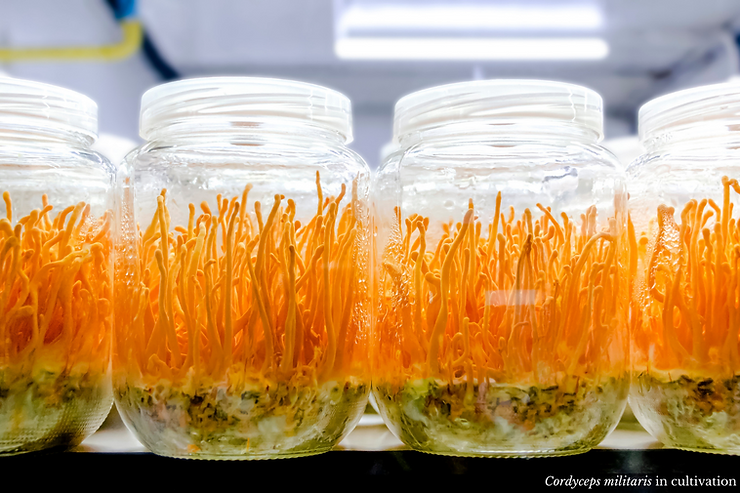
Happily, Cordyceps militaris (Trooping Cordyceps) fits this role well. Used in China as a tonic for hundreds of years, this bright orange-red fruiting body is both abundant in nature and easily cultivated, making it far more affordable and accessible [3]. A growing body of research indicates the two species offer comparable physiological effects [3] – and recent metabolite profiling found they share 83% of pooled primary metabolites [4].
For these reasons, my current preference is C. militaris fruiting body for the best clinical results. It is also worth noting that commercial Cordyceps is grown on insect-free substrates – reassuring for the mycophobic among us.
Key Bioactive Compounds in Cordyceps militaris
Understanding what’s in Cordyceps helps explain its diverse clinical applications.
Polysaccharides – as with all medicinal mushrooms, C. militaris contains unique fungal polysaccharides. These long, indigestible polymers of sugar molecules interact with and modulate immune system function in clinically meaningful ways. In the case of Cordyceps, the polysaccharide activity has a particular affinity for lung, kidney, and heart health, as well as convalescent support.
Nucleosides – uniquely among medicinal mushrooms, C. militaris contains an abundance of nucleosides: the structural subunits of DNA and RNA. These include uridine and adenosine, but the most clinically significant is cordycepin (3′-deoxyadenosine) [5]. Cordycepin mimics endogenous adenosine, with downstream implications for energy metabolism and a wide range of metabolic functions – an effect that likely underpins many of Cordyceps’ clinical benefits [6].
Cordyceps Mushroom Benefits – The Clinical Evidence
Physical Performance and Stamina
Cordyceps is revered in folk traditions for improving physical stamina, and the research provides some support for this reputation. One study found significant improvement in oxygen utilisation and a meaningful extension of time to exhaustion during high-intensity exercise after just three weeks of use [7] – though it is worth noting participants took C. militaris in combination with other medicinal mushrooms, making it difficult to isolate Cordyceps’ specific contribution.
An older study using O. sinensis (1g daily) demonstrated improved exercise performance in healthy adults aged 50–75 [8]. Additional studies investigating Cordyceps combined with Rhodiola crenulata – a powerful adaptogen with likely synergistic effects – indicated improved aerobic performance [9] and body composition outcomes [10].
Kidney Health and Organ Protection
Human evidence demonstrates that 100mg of C. militaris fruiting body extract can protect organ function in advanced kidney disease. A double-blind, placebo-controlled, randomised clinical trial of 98 subjects found significant protection against disease progression, with meaningfully improved markers of kidney function and health – effects attributed primarily to cordycepin content [5].
Further human trials from Asia have investigated O. sinensis as an adjuvant to standard immunosuppressive therapy in kidney transplant recipients. Meta-analyses of these trials outline several notable benefits: improved graft acceptance and healing rates, reduced side effects of immunosuppressant drugs, and better functional outcomes for both kidneys and liver [11,12].
Immune System Enhancement
Two particularly well-designed human trials illustrate the immune-enhancing capacity of C. militaris – both randomised, double-blind, and placebo-controlled.
The first found that 1.5g of fruiting body (ethanol extract containing 1.9mg/g cordycepin) significantly enhanced cell-mediated immune function in a healthy population, with measurable increases in NK cell activity and lymphocyte proliferation after four weeks [13].
The second – a Korean study of one hundred adults with a history of at least two colds per year – found that twelve weeks of C. militaris supplementation significantly improved immune response, evidenced by raised natural killer cell activity and IgA levels compared to placebo [14]. O. sinensis has demonstrated comparable results, enhancing cell-mediated immunity and reducing inflammatory response [15].
How to Choose a Quality Cordyceps Supplement
Not all Cordyceps products are equal. Here’s what to look for:
Species: Confirm the product contains C. militaris – the most clinically effective and sustainably cultivated species. Other species exist but have limited research support at this stage.
Fruiting body over mycelium: Seek a fruiting body extract rather than mycelium alone – or at minimum, a product combining both. The fruiting body contains significantly higher levels of cordycepin than mycelium, which is critical for clinical efficacy [19].
Watch out for cordycepic acid claims: If a product claims standardised levels of cordycepic acid, don’t be misled. Cordycepic acid is not the same as cordycepin – it is simply mannitol, a common sugar found in all mushrooms with no particular therapeutic significance [20].
Cordyceps Dosage Guidelines
I recommend the equivalent of 2–5g of C. militaris dry fruiting body daily. Higher doses may be appropriate in cases of cancer or other advanced conditions.
Importantly, Cordyceps is best taken in divided doses throughout the day. Cordycepin has a relatively short half-life – dividing the daily dose into 2–4 administrations maintains more consistent plasma levels and optimises therapeutic outcomes.
Cordyceps is generally considered safe within this dosage range. Occasional mild gastrointestinal side effects have been reported, including nausea, diarrhoea, and dry mouth [1]. If these occur, reducing the dose or taking with food typically resolves them.
Who Is Cordyceps Best Suited For?
Based on the traditional use record and available clinical evidence, I recommend Cordyceps particularly for:
- Lung support and respiratory health
- Kidney support and organ protection
- Convalescence after infection or serious illness
- Improved physical vitality and stamina
- Healthy ageing and long-term health prophylaxis
- Immune enhancement in susceptible individuals
Frequently Asked Questions About Cordyceps
What is the difference between Cordyceps militaris and Cordyceps sinensis? Cordyceps sinensis (now Ophiocordyceps sinensis) is the traditional species used in Asian medicine but is rare, expensive, and cannot be cultivated. Cordyceps militaris is a closely related species that can be commercially cultivated, is more affordable, and shares 83% of primary metabolites with O. sinensis – making it the preferred choice for clinical use.
What does Cordyceps do for the immune system? Human clinical trials show C. militaris increases NK cell activity and lymphocyte proliferation, enhancing both innate and adaptive immune responses. It has also demonstrated reduced inflammatory markers in several studies.
How much Cordyceps should I take per day? A general therapeutic dose is 2–5g of C. militaris dry fruiting body equivalent daily, divided into 2–4 doses throughout the day to account for cordycepin’s short half-life.
Is Cordyceps safe to take long term? Based on both its long traditional use history and available clinical evidence, Cordyceps is considered safe for long-term use at recommended doses. Mild gastrointestinal side effects are occasionally reported but are generally dose-dependent and transient.
Should I choose Cordyceps fruiting body or mycelium? Fruiting body is preferable – it contains significantly higher cordycepin levels than mycelium. If only a combined product is available, ensure fruiting body is the primary component.
If you would like a more in-depth and clinically-focused take on this amazing mushroom, see my Cordyceps Monograph.
Want to go deeper? My course Mastering Medicinal Mushrooms covers the complete clinical evidence base for Cordyceps and ten other key medicinal fungi – from biochemistry to practical prescribing guidance for practitioners and serious students alike.
Prefer a more personalised approach? I also offer one-on-one herbal medicine consultations for those looking for tailored clinical support.
References
[1] Olatunji OJ, Tang J, Tola A, et al. The genus Cordyceps: An extensive review of its traditional uses, phytochemistry and pharmacology. Fitoterapia. 2018 Sep;129:293-316.
[2] Zhou X, Gong Z, Su Y, et al. Cordyceps fungi: natural products, pharmacological functions and developmental products. J Pharm Pharmacol. 2009 Mar;61(3):279-91.
[3] Nxumalo W, Elateeq AA, Sun Y. Can Cordyceps cicadae be used as an alternative to Cordyceps militaris and Cordyceps sinensis? – A review. J Ethnopharmacol. 2020 Jul 15;257:112879.
[4] Zhong X, Gu L, Xiong WT, W et al. 1H NMR spectroscopy-based metabolic profiling of Ophiocordyceps sinensis and Cordyceps militaris in water-boiled and 50% ethanol-soaked extracts. J Pharm Biomed Anal. 2020 Feb 20;180:113038.
[5] Sun T, Dong W, Jiang G, et al. Cordyceps militaris Improves Chronic Kidney Disease by Affecting TLR4/NF-κB Redox Signaling Pathway. Oxid Med Cell Longev. 2019 Mar 31;2019:7850863.
[6] Hawley SA, Ross FA, Russell FM, et al. Mechanism of Activation of AMPK by Cordycepin. Cell Chem Biol. 2020 Feb 20;27(2):214-222.e4.
[7] Hirsch KR, Smith-Ryan AE, Roelofs EJ, et al. Cordyceps militaris Improves Tolerance to High-Intensity Exercise After Acute and Chronic Supplementation. J Diet Suppl. 2017 Jan 2;14(1):42-53.
[8] Chen S, Li Z, Krochmal R, et al. Effect of Cs-4 (Cordyceps sinensis) on exercise performance in healthy older subjects: a double-blind, placebo-controlled trial. J Altern Complement Med. 2010 May;16(5):585-90.
[9] Chen CY, Hou CW, Bernard JR, et al. Rhodiola crenulata– and Cordyceps sinensis-based supplement boosts aerobic exercise performance after short-term high altitude training. High Alt Med Biol. 2014 Sep;15(3):371-9.
[10] Liao YH, Chao YC, Sim BY et al. Rhodiola/Cordyceps-Based Herbal Supplement Promotes Endurance Training-Improved Body Composition But Not Oxidative Stress and Metabolic Biomarkers: A Preliminary Randomized Controlled Study. Nutrients. 2019 Oct 3;11(10). pii: E2357.
[11] Hong T, Zhang M, Fan J. Cordyceps sinensis (a traditional Chinese medicine) for kidney transplant recipients. Cochrane Database Syst Rev. 2015 Oct 12;(10):CD009698.
[12] Ong BY, Aziz Z. Efficacy of Cordyceps sinensis as an adjunctive treatment in kidney transplant patients: A systematic-review and meta-analysis. Complement Ther Med. 2017 Feb;30:84-92.
[13] Kang HJ, Baik HW, Kim SJ, et al. Cordyceps militaris Enhances Cell-Mediated Immunity in Healthy Korean Men. J Med Food. 2015 Oct;18(10):1164-72.
[14] Jung SJ, Hwang JH, Oh MR. Effects of Cordyceps militaris supplementation on the immune response and upper respiratory infection in healthy adults: a randomized, double-blind, placebo-controlled study. Journal of Nutrition and Health. 2019 Jun 1;52(3):258-67.
[15] Jung SJ, Jung ES, Choi EK, et al. Immunomodulatory effects of a mycelium extract of Cordyceps (Paecilomyces hepiali; CBG-CS-2): a randomized and double-blind clinical trial. BMC Complement Altern Med. 2019 Mar 29;19(1):77.
[16] Qin P, Li X, Yang H, et al. Therapeutic Potential and Biological Applications of Cordycepin and Metabolic Mechanisms in Cordycepin-Producing Fungi. Molecules. 2019 Jun 14;24(12). pii: E2231.
[17] Sprecher M, Sprinson DB. A Reinvestigation of the Structure of “Cordycepic Acid”1a. J Org Chem. 1963;28(9):2490–2491.