Recipe by Lee Carroll, BHSc (WHM), BSc
Why Put Lion’s Mane in a Chocolate Cake? A Brain Mushroom Meets Comfort Food
For centuries, Lion’s Mane mushroom (Hericium erinaceus) has been valued across East Asian traditions as a tonic for the mind and nervous system. With its cascading white tendrils resembling a lion’s mane, it earned a reputation not as a quick stimulant, but as a food that nourishes clarity and long-term cognitive vitality.
Today, Lion’s Mane has become widely known as a “brain mushroom.” But modern research tells a more interesting story than the promise of instant focus.
Lion’s Mane doesn’t act like caffeine. It doesn’t force the brain into temporary performance. Instead, it works quietly over time, supporting maintenance and repair within the nervous system. Recent studies in healthy adults found only modest changes in cognitive tests—and that’s actually the point. Lion’s Mane isn’t designed to “boost” an already well-functioning brain. Its value lies in supporting systems under pressure: during stress, aging, or periods of neurological strain. And emerging clinical evidence supports its use where it matters most: in mild cognitive impairment and early Alzheimer’s disease, where trials have shown measurable cognitive improvements.
That support happens through interconnected pathways. Lion’s Mane contains compounds that act along what researchers call the gut–brain axis. Its fibres help shape the gut microbiome, encouraging beneficial bacterial metabolites linked to both immune health and brain signalling. At the same time, unique compounds called hericenones stimulate nerve growth factor (NGF), a protein involved in keeping neurons healthy and communicating effectively. Lion’s Mane also provides ergothioneine, a specialised antioxidant that accumulates in high-stress tissues like the brain, supporting cellular resilience.
These actions help explain why Lion’s Mane’s effects are often described as quiet but cumulative. They may not appear in a quick cognitive test, but they contribute to maintaining nervous system stability across months and years.
Which brings us to cake.
Chocolate has always been comfort food: grounding, familiar, and shared. But cacao itself has medicinal history—its flavanols support blood flow to the brain and have been shown to benefit cognitive performance and mood, particularly during demanding mental tasks. Pairing Lion’s Mane with rich chocolate fudge transforms a traditional indulgence into something subtly functional—nourishment for both enjoyment and long-term wellbeing.
When combined with Tremella and flaxseed, the recipe also creates a naturally dense, fudgy texture without relying on refined ingredients.
Tremella (Tremella fuciformis), sometimes called snow fungus, has its own history in Chinese medicine and cuisine, valued particularly for skin and graceful aging. Its polysaccharides hold moisture at levels comparable to hyaluronic acid, and studies show they support collagen and elastin in skin cells exposed to UV stress. Like Lion’s Mane, Tremella also acts as a prebiotic, feeding beneficial gut bacteria and supporting the production of compounds linked to skin health, inflammation balance, and metabolic resilience.
Together, these mushrooms offer not a quick fix, but tissue support: moisture, stability, microbial balance. The kind of nourishment that happens slowly, from the inside.
Sometimes functional foods don’t need to look medicinal. Sometimes they just need to be eaten and enjoyed.
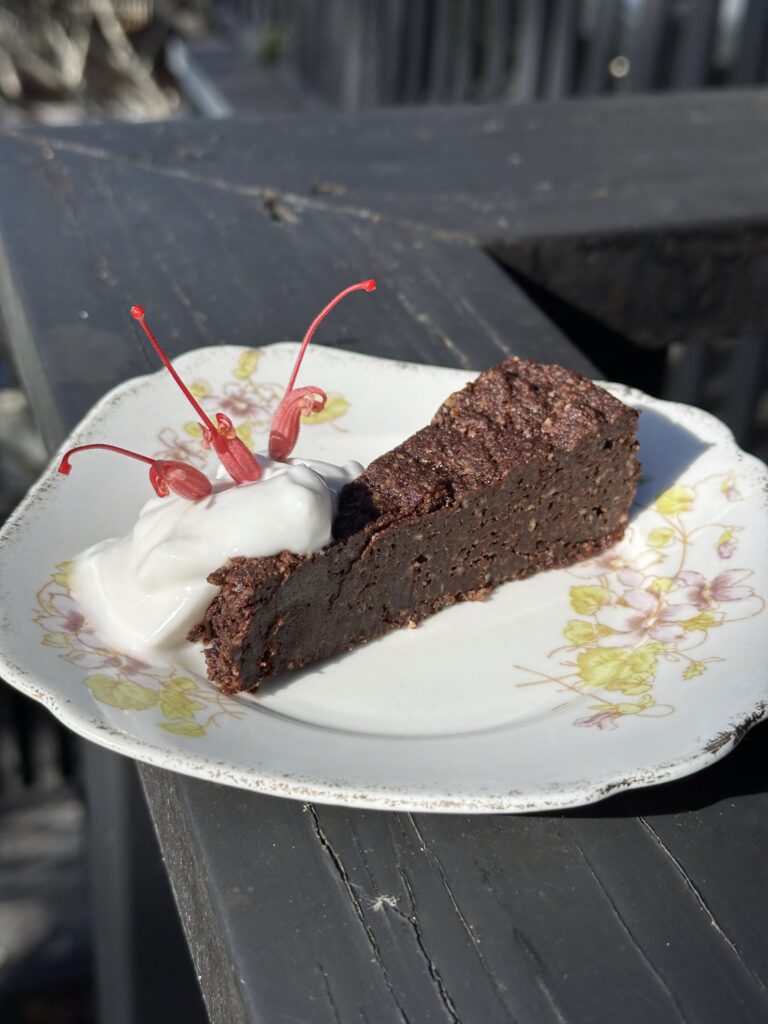
Ingredients
- 200 g butter
- 250 g dark chocolate
- 3 tablespoons whole flaxseeds*
- 150–165 mL water (10–11 metric tablespoons)
- ½ cup succanat or other unprocessed natural sugar
- 200 g almond meal
- 2 metric teaspoons baking powder
- 2 metric teaspoons Real Mushrooms Tremella extract (≈6 g)
- 6 teaspoons Real Mushrooms Lion’s Mane powder (≈12 g)
Method
- Line a 26 cm (10 in) springform pan with baking paper.
- Grind flaxseeds and mix with Tremella powder.
- Add water and stir until smooth; set aside.
- Melt butter and chocolate gently in a saucepan over low heat (do not boil).
- Stir in sugar.
- In a bowl, combine almond meal, Lion’s Mane powder, and baking powder.
- Add melted chocolate mixture to the dry ingredients and stir well.
- Mix in the flaxseed–Tremella mixture, adjusting water as needed until the batter is smooth but not wet.
- Pour batter into the prepared pan and spread evenly.
- Bake at 150°C for 45 minutes.
- Allow to cool completely in the pan, then refrigerate before serving for the best fudgy texture.
Avoid pre-ground flaxseed, which oxidises quickly and can develop rancid oils.
Practical Notes
- Lion’s Mane has a mild, slightly savoury flavour that disappears into chocolate, making it ideal for functional baking.
- The combination of healthy fats, fibre, and mushroom polysaccharides helps slow digestion and supports steady energy release.
- Each slice provides a meaningful culinary serving of Lion’s Mane as part of a food-first approach to nervous system support.
Takeaway
Lion’s Mane isn’t about instant mental enhancement. It’s about maintenance, supporting the brain, gut, and immune system in ways that accumulate quietly over time. From β-glucans that nourish the microbiome to neurotrophic compounds that support neuronal resilience, this mushroom works best as a daily habit rather than a quick fix.
And sometimes the most sustainable health practices are the ones that feel enjoyable enough to repeat.